
Environmental Governance in the New Economic City

Before approving the project, Sarmad Company for Trade, Industry, and Real Estate Investment reviewed environmental protection regulations and global governance standards. In this context, the company contracted research centers and experts specialized in environmental assessment and conservation. The company then gave strong priority to compliance with relevant legislation. Based on environmental study recommendations, the company’s Engineering Studies Unit also adopted the principles of environmental adaptation, pollution control, and adherence to health standards—guided by the principle of “no harm and no harassment.” Key features of environmental quality in the industrial city include:
- Ensuring Air Quality:
During the planning phase, the company prioritized keeping the city’s air clean by reducing emissions from vehicles, factories, and workshops, and by limiting dust and sand stirred by winds in a coastal desert environment. This is achieved by allocating industrial and storage zones away from residential areas, based on modern studies for safe dispersion of emissions away from health risks, adopting clean and safe energy, and expanding green areas within and around the city.
The Engineering Unit also paid close attention to ventilation standards for apartments, villas, streets, gardens, parks, and all public facilities in line with international health standards. - Modern Sewerage Network:
Engineering studies approved a modern sewerage network aligned with fourth-generation city technologies, characterized by sustainability and smart monitoring of potential faults. The system is designed with tight integration, enabling centralized alerts for apartments, villas, and all detailed city facilities.
The company also has a modern concept for managing waste generated during city construction and by residents’ consumption—solid, liquid, and organic/fermented waste. - Modern Water Network:
Water is essential to life, and no modern city can be established without a clear plan for water supply. Accordingly, the company adopted study recommendations to develop a sustainable, smart fourth-generation water network. The study indicates that the city will be supplied through two main sources: groundwater (currently used by Yemeni cities) and seawater desalination, given the city’s coastal location—while ensuring water cleanliness and quality standards. - Stormwater Drainage:
To drain rainwater from city streets in a healthy manner and protect residents from the consequences of stagnant ponds, engineering and agricultural studies approved modern systems to collect rainwater and reuse it for irrigation. The engineering studies also approved the construction of a water channel crossing the city with a length of 12.5 km. One of its main functions is the proper drainage of expected stormwater from nearby streets and its discharge to the sea through this channel, which is connected to the city’s streets via a carefully designed drainage network. - Clean Energy:
The study recommended integrating environmentally friendly clean energy, including solar and wind power. This energy will operate alongside the public government grid to reduce air pollution sources. To minimize emissions from fuel-powered power stations, engineering studies emphasized directing emissions in ways that, as far as possible, do not harm residents. The Engineering Studies Unit also plans electricity delivery to housing units and city facilities according to modern city layouts that rely on sustainable underground networks. - Afforestation and Green Spaces:
The company has an afforestation plan to expand green spaces in order to reduce respiratory and eye diseases, increase biodiversity, and combat desertification. The plan will be implemented by a specialized team of experts and technicians. The company approved planting 667 trees per square kilometer along the city perimeter (the city’s boundary belt), and 222 trees per square kilometer inside the city. The company also approved establishing gardens and green areas covering 137 feddans. - Soil Protection:
The Environmental Impact Assessment study recommended protecting soil from potential contamination by chemicals resulting from industrial and agricultural activities during city development, using modern techniques such as chemical stabilization or soil-improving additives. - Public Tranquility and Noise Reduction:
During construction, the company will adhere to quality standards that reduce harm and noise as much as possible. City planning will also consider measures that reduce traffic congestion, population bottlenecks, and stress-inducing factors.
Related Articles
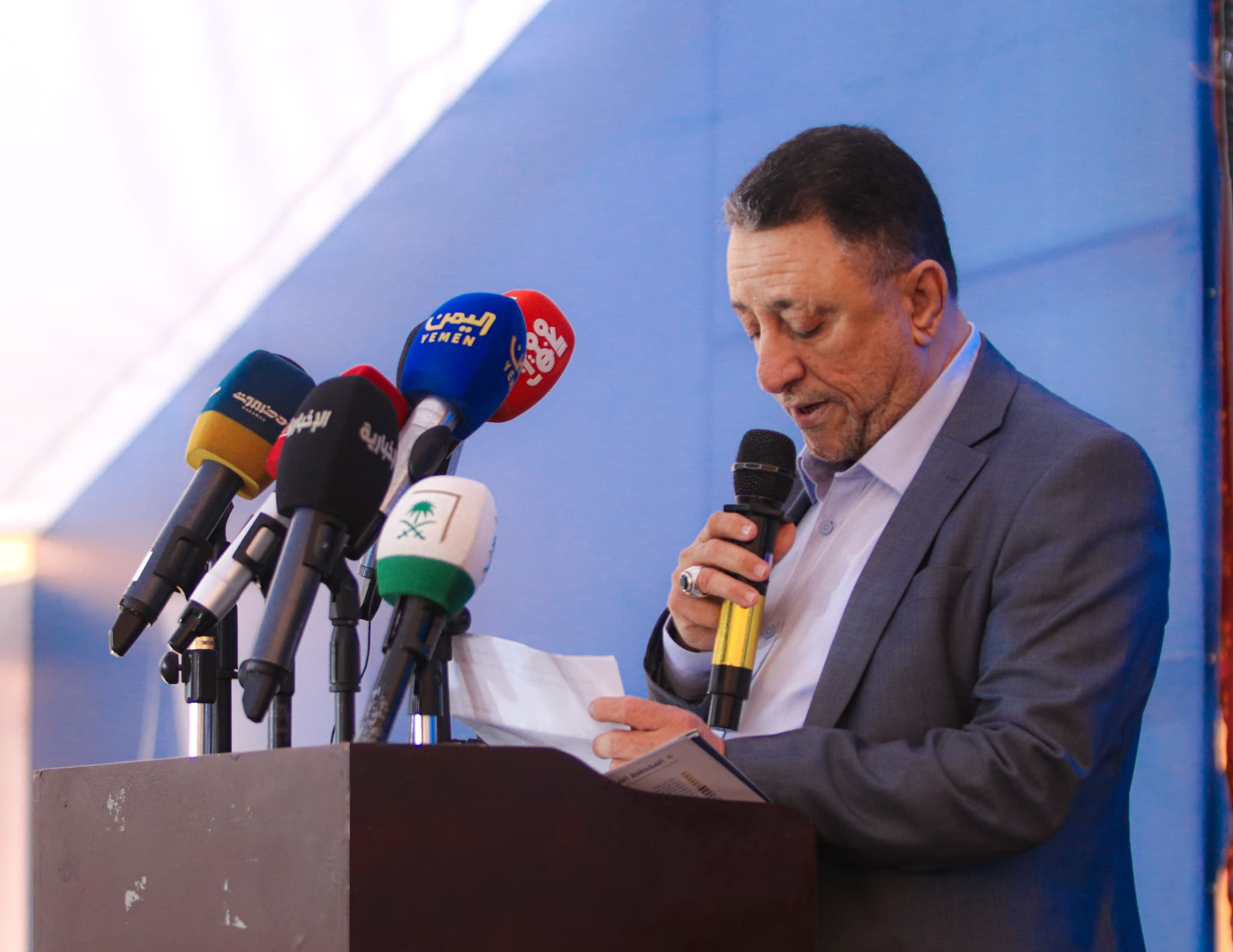
The Secretary-General of the Abyan Local Council Affirms the Importance of the New Economic City in Supporting Development and Investment
Mr. Mahdi Al-Hamad, Secretary-General of the Abyan Local Council, emphasized the importance of the New Economic City as a strategic project that supports development, stimulates investment

The New Economic City: From the Ashes of the Past to the Horizon of Modernity and Development
A fourth-generation city near Aden, designed to turn untapped land into a hub for investment, jobs, and sustainable growth—bridging Yemen’s heritage with a smart, modern future.

Geological Characteristics of the New Economic City Site
NEC sits on the Gulf of Aden’s north coast near Aden. Layered coastal sediments over older rocks; regional quakes are low and there’s no recent volcanism—supporting stable foundations.